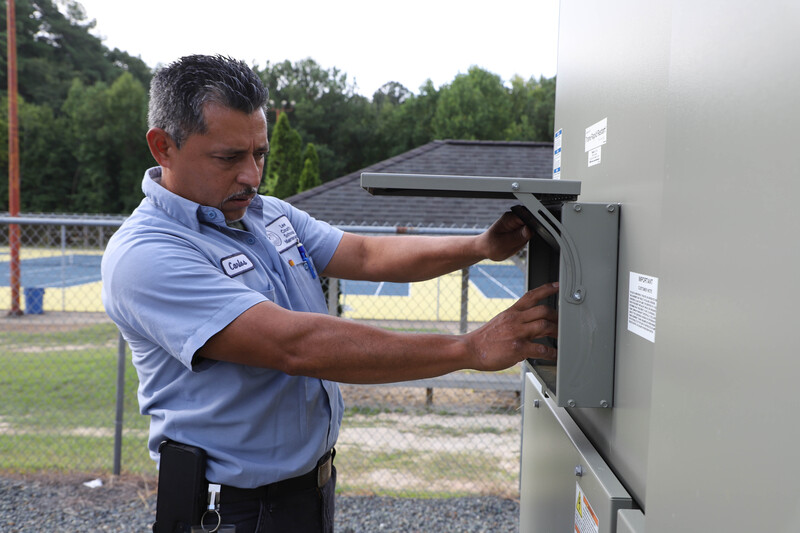
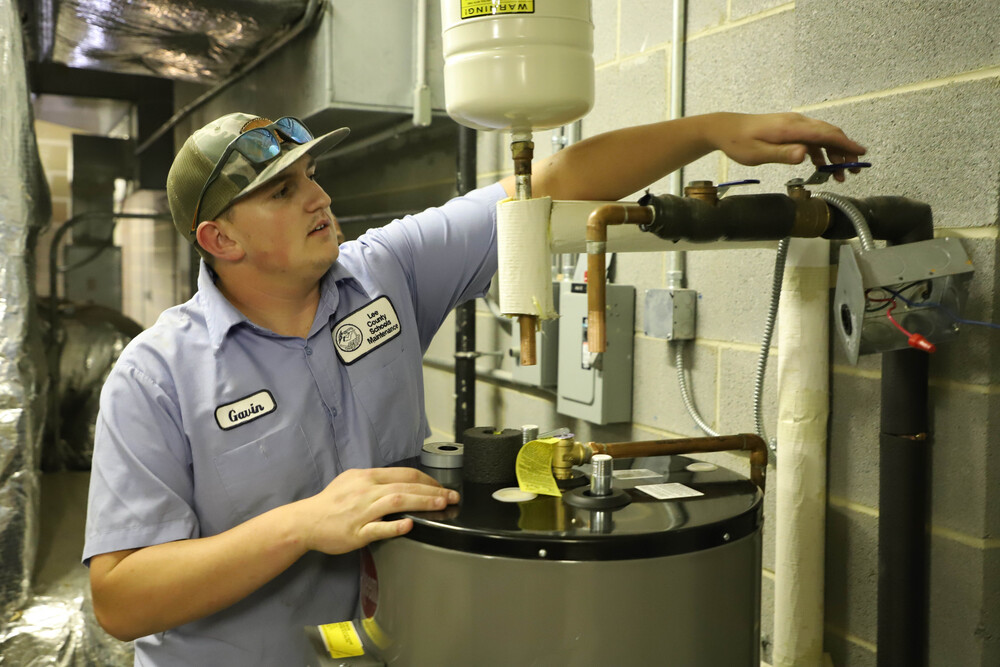
With just 15 employees, the Lee County Schools Maintenance Department does far more than fix what breaks. From completing construction projects and renovating offices to performing preventative maintenance and responding to hundreds of work orders, the team plays a critical role in helping the district stretch its resources and stay focused on student achievement.
This summer, the team not only completed regular summer maintenance like changing all filters on HVAC units across the district’s 17 campuses and performing preventative maintenance on all lights, toilets, sinks, drains, ramps, and ceiling tiles at school campuses, they played an integral role in setting up mobile classrooms at Deep River, Greenwood, and a new eight-classroom pod at J. Glenn Edwards.
For the District’s Director of Maintenance Chris McNeill, the department’s greatest contribution is the ability to make the district’s limited resources go further. “It’s really more about saving on the little things, stretching those dollars,” he explained.
The 15-member crew provides the district with a flexible workforce capable of responding quickly to problems, completing construction and renovation projects, and preventing larger issues from developing.
“Their work may not always be visible to students and families, but it helps ensure that classrooms are ready, buildings are functioning and teachers and students have what they need,” McNeill said. “Everybody steps up. They make contributions that do really help us make sure kids and teachers have what they need to thrive.”
A busy, sweaty summer lays groundwork for successful year
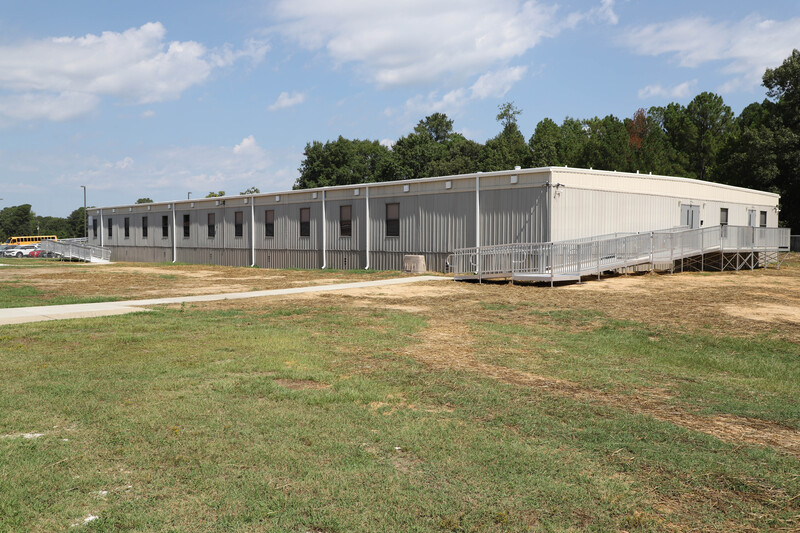 At J. Glenn Edwards, the department helped prepare the new classroom pods for use. Maintenance employees worked alongside teachers to move furniture and supplies into the new spaces and transform them into functioning classrooms.
“I’ve got 15 guys,” McNeill said. “Each one of us has been at J. Glenn Edwards and spent at least 40 hours during the summer helping prepare the new classroom pod. That work included everything from installing bulletin boards to checking plumbing. They did what we needed to make sure the new classrooms were ready for students on the first day of school.”
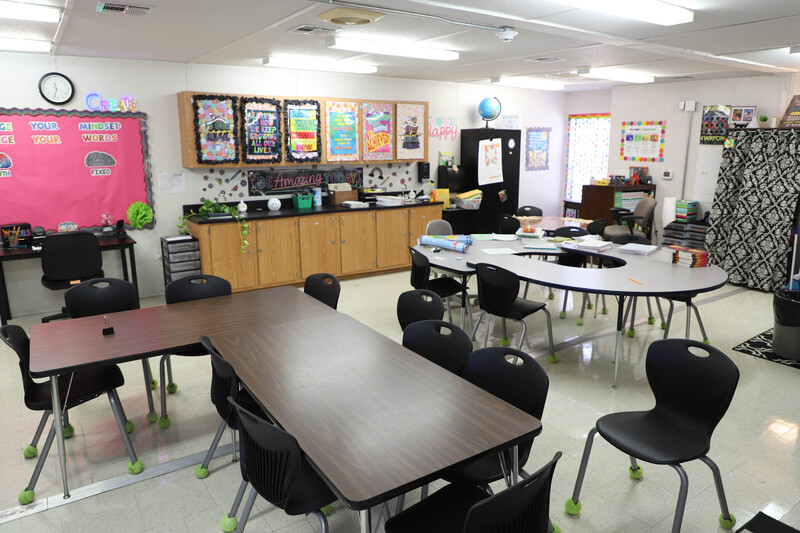
“My team and the teachers did a great job moving everything out there,” McNeill highlighted. “One day - we all sweated - but they did it. They got everything moved in there and got it ready to go. They really made this a classroom environment.”
While a contractor was used to move the pods into place and prepare the placement site, McNeill highlighted the savings created by jobs that may seem small individually, but completing them with district employees rather than hiring outside contractors provides a significant benefit.
“We’re doing things that we don’t have to pay a contractor to do,” McNeill explained. “That’s really where we save money, having people that can install the screens, dry-erase boards, and accomplish light plumbing or electrical work instead of calling a contractor to do it.”
The savings extends to materials, too. When the maintenance team purchases supplies directly from a supply house, the district avoids the additional overhead and markup that a contractor would typically add.
Taking on projects of all sizes
The maintenance department’s work isn’t limited to minor repairs and installations. Employees have developed the skills to handle a wide range of projects, including smaller HVAC repairs and installations. The department can replace compressors and small HVAC units while relying on contractors for larger projects like chiller replacements.
“To call a contractor to come out for one little thing is sometimes around $5,000 to bring them out here,” McNeill explained. “I have people that are trained to handle some of the smaller repairs on HVAC, plumbing, and electrical which really does help keep our costs down.”
Several summer projects illustrate just how much those skills can save the district.
At Tramway Elementary, the maintenance department carpentry team built a new bathroom in the self-contained classroom for EC students. “A contracted plumber handled the connection to the main sewer line,” McNeill explained, “but my guys like Rodney [Hall], Michael [Grant], Murph [Barnes], Johnny [Holt], and Jeremy [Wicker] in Carpentry built the room, painted it and got it ready for our plumbers to put in the sink and toilet.”
The carpentry team also came in handy earlier in the year when it was time to modernize the Finance Department space at Central Office. “The quote for new cubicles and installation came in at over $50,000,” McNeill said.
McNeill and his team came up with a plan that included building spaces within the space for each finance employee to have their own space in the open-concept office before constructing, painting and adding the needed receptacles and lighting. “We might have spent $10,000 in wood, lights, sheetrock, and other supplies,” McNeill smiled as he described the impact his team has on the district.
At W.B. Wicker and Warren Williams Pre-K campus, the department built two storage sheds over the summer break. Rather than purchasing completed sheds, maintenance employees bought the lumber and constructed the units themselves.
“Those types of sheds usually run at least $5,000 to $6,000 to buy,” McNeill said. “We built two sheds for the cost of one.”
 Preventing problems before they become expensive
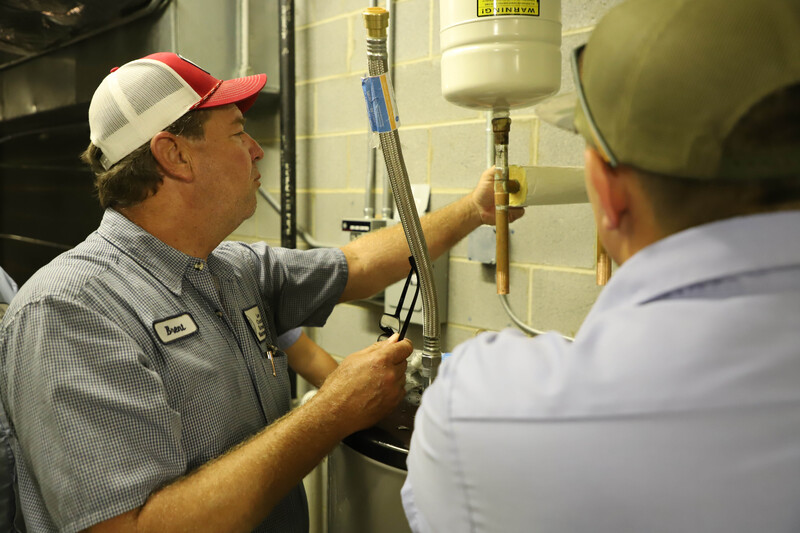
Saving money isn’t only about avoiding contractor bills. Preventative maintenance is another major part of the department’s work. Over the summer, maintenance employees continued handling work orders while inspecting e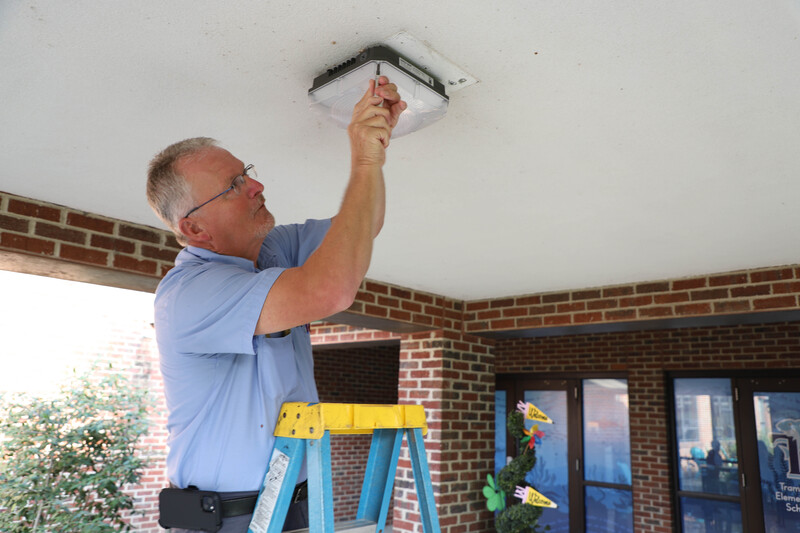 equipment and building systems to identify problems before they become major repairs.
“We closed 848 work orders in the last 30 days,” McNeill said. “We easily did more than a thousand work orders in the summer and did a lot of preventative maintenance on top of that.”
The department routinely checks plumbing, HVAC systems and other equipment. Those inspections can identify a problem before it causes a breakdown.”
During the past 30 days the department completed about 50% of its preventative maintenance while handling an influx of back-to-school work orders. That workload changes throughout the school year. When work orders slow down, the maintenance team has more time to concentrate on the preventative maintenance. McNeill said the team usually catches up on that preventative work between October and February.
“We do it regularly so we can find the problems before they put the work order in,” McNeill explained. “Most of the time, we’ll find a unit that is not working before the school catches it. Maybe a belt slipping before it breaks down, something like that.”